
Leaf & Bean: The History of Homesteading in North America, Part One
- LEAF AND BEAN FARM
- Jul 31
- 5 min read

Part One: The People, the Land, and the Beginning of a Lifestyle
Today, the word homesteading means many different things.
For some, it’s a garden in the backyard. For others, it’s raising chickens, preserving food, baking bread from scratch, or living off the grid. Some homesteads span hundreds of acres, while others fit onto a suburban lot or apartment balcony.
But homesteading didn’t begin as a hobby or a lifestyle trend.
For many families, it was simply the way they survived.
Understanding the history of homesteading helps us appreciate not only the skills that have been passed down through generations but also the many different people whose stories shaped what homesteading has become today.
Context: What Did “Homesteading” Originally Mean?
Historically, the word homestead referred to a family’s home and the land connected to it. It was the place where people lived, worked, grew food, raised animals, and built a life.
That definition took on new meaning in the United States during the nineteenth century.
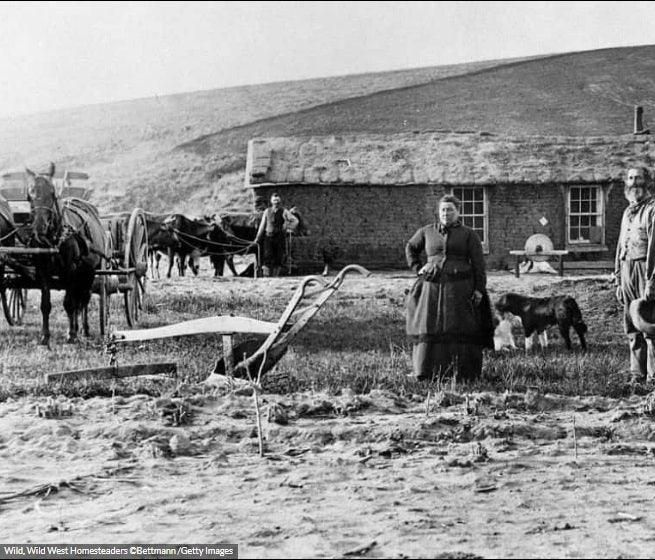
In 1862, in the middle of the Civil War, President Abraham Lincoln signed the Homestead Act into law. The Act allowed many adults who met the legal requirements—including citizens and those who intended to become citizens—to claim up to 160 acres of surveyed public land. In exchange, they were required to live on the land, improve it, and cultivate it for five years before receiving ownership.
The law opened the door for hundreds of thousands of families to move west in search of opportunity.
For many, it represented hope.
For others, that opportunity remained difficult—or impossible—to access.
It is also important to remember that much of the land distributed through the Homestead Act was the ancestral homeland of Indigenous Nations who had lived there for generations. As settlers moved west, Indigenous communities were displaced through treaties, conflict, and government policies that forever changed the landscape of North America.
Understanding both the opportunity the Homestead Act created and the people it displaced gives us a fuller picture of homesteading’s history.
Homestead or Farm: Was There a Difference?
People often use the words homestead and farm interchangeably, but historically they were not always the same thing.
A homestead was centered on meeting the needs of the household.
Families grew vegetables, kept livestock, preserved food, repaired equipment, sewed clothing, gathered firewood, and learned practical skills that allowed them to rely less on outside resources. Money was often limited, so nearly every member of the family contributed to daily life.
Commercial farms had a different primary purpose.
While many farmers also maintained gardens and preserved food for their own families, their focus was producing crops or livestock to sell. Wheat, corn, cotton, cattle, and other commodities provided income that supported the household.
The distinction wasn’t about the amount of land someone owned.
It was about the purpose of the land.
A homestead asked, “What does our family need?”
A farm asked, “What can we produce for the market?”
Many families blended both approaches, but understanding this difference helps explain why the word homesteading has continued to evolve over time.
Building a Life From the Ground Up
Life on an early homestead demanded resilience.
A new homestead often began with little more than open prairie, simple tools, determination, and the hope of creating something lasting.
Families built homes, dug wells, cleared land, planted gardens, raised chickens, pigs, and cattle, and learned practical skills that modern families often purchase instead of making themselves.
Daily life revolved around the seasons.
Spring meant planting.
Summer brought long days of tending crops and livestock.
Autumn was devoted to harvesting and preserving food.
Winter became the season for repairing tools, sewing clothing, caring for animals, and preparing for another year.
Nearly every task contributed to the family’s survival.
As Communities Grew, So Did Opportunity
By the late 1800s, railroads connected rural communities to expanding towns and growing markets.
Families could purchase flour, fabric, nails, tools, and equipment that earlier settlers often had to make themselves.
For homesteaders, this meant greater convenience without completely replacing self-sufficiency.
Many households still raised most of their own food while earning additional income by selling eggs, butter, vegetables, cream, or livestock.
Commercial farming also began changing rapidly.
Improved machinery allowed farmers to cultivate larger fields, and agriculture became increasingly connected to regional and national markets.
Although both lifestyles continued to share many skills, the goals of homesteads and farms slowly became more distinct.
A Story That Isn’t Always Told: Black Homesteaders
When many people picture nineteenth-century homesteaders, they often imagine white families traveling west in covered wagons.
That image tells only part of the story.
Following the Civil War, thousands of African Americans also dreamed of owning land and building independent lives.
Legally, the Homestead Act did not exclude people based on race. However, for many newly freed African Americans, the opportunity to claim land was far more complicated than the law itself suggested.
The Civil War had ended slavery, but freedom did not immediately bring equal opportunity.
Many Black families remained trapped in systems such as sharecropping and tenant farming. Others faced racial violence, voter intimidation, discrimination, limited financial resources, and unequal access to transportation, information, and legal support. These barriers made it far more difficult to leave established communities and begin new lives on the frontier.
Even so, many families chose to try.
For them, homesteading represented more than acquiring land.
It represented the possibility of independence, stability, and the chance to build generational wealth through ownership rather than laboring on someone else’s property.

The Exoduster Movement
Beginning in 1879, thousands of African Americans participated in what became known as the Exoduster Movement.
Leaving states along the Mississippi River and throughout the South, families traveled west—many settling in Kansas—in search of land, opportunity, and greater freedom.
One of the movement’s most influential leaders was Benjamin “Pap” Singleton, who encouraged Black families to establish independent farming communities where they could own land and shape their own futures.
The journey west was not easy.
Many families arrived with limited money, few possessions, and little certainty about what awaited them. They faced harsh weather, unfamiliar landscapes, and the enormous challenge of building homes and farms from the ground up.
Yet despite these hardships, communities began to take root.
One of the best-known examples is Nicodemus, Kansas, founded in 1877. There, Black homesteaders built homes, schools, churches, businesses, and farms, creating one of the first successful all-Black communities on the Great Plains.
Today, Nicodemus stands as a reminder that the story of homesteading includes people from many different backgrounds, each contributing their own chapter to North American history.
Neighbor’s Takeaway
Homesteading began as a way for families to build a home, produce food, and create a life through hard work and practical skills. While the Homestead Act opened opportunities for many settlers, not everyone had equal access to those opportunities, and the history includes both hope and hardship.
Thank you for spending part of your day here with me. Understanding where homesteading began gives us a deeper appreciation for the skills, sacrifices, and resilience that continue to inspire this lifestyle today.
.
Until next time, take care, keep learning, and have a wonderful day, Neighbor.
— Nivek
Leaf & Bean Farm


Comments